
Your Entire Digital Identity Is Selling for Less Than $50 on the Dark Web
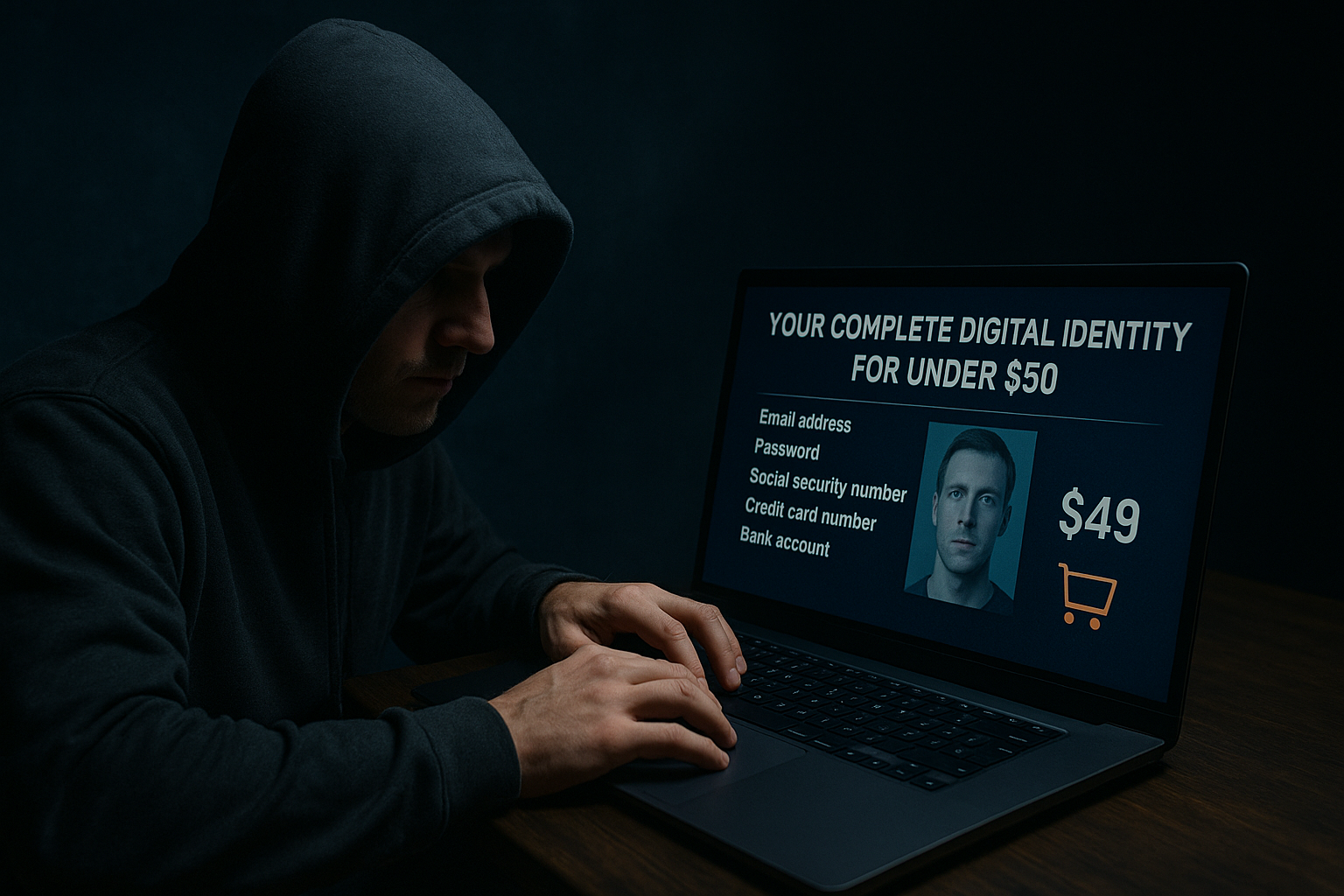
Your personal information is probably already for sale. Deep in the internet's hidden corners, cybercriminals are trading stolen data like baseball cards—and your digital life might be their latest acquisition. This shadow marketplace, known as the dark web, operates beyond Google's reach through specialized browsers where anonymity reigns and your private information becomes someone else's profit.
Your Complete Digital Identity for Under $50
For less than the cost of dinner out, criminals can buy your entire digital life—social media accounts, banking details, email passwords, streaming services, and more. Individual accounts go for just $1 each, complete with bulk discounts and "lifetime warranties" like some twisted online store. With researchers tracking nearly 40,000 posts selling stolen data over two years, your information isn't just available—it's practically everywhere.
What Personal Information Ends Up There
The most common types of personal data found on dark web marketplaces include:
- Email addresses and passwords
- Credit card numbers and banking details
- Social Security numbers and tax IDs
- Driver's license and passport information
- Phone numbers and home addresses
- Health insurance information
Recent large-scale breaches have exposed billions of personal records. In one notable incident, nearly 2.9 billion records were allegedly stolen from a major background check service. Another massive breach affected over 12 billion personal records in a single year.
How Your Information Gets There
Most personal data reaches the dark web through two main channels:
Company Data Breaches: When hackers successfully breach a company's database, they sell or distribute the stolen information on dark web forums. These breaches affect major corporations, hotels, retailers, healthcare systems, and government agencies. Ransomware groups now post about successful attacks more than 500 times per month during peak periods.
Malware "Infostealers": Programs like RedLine and Lumma specifically target browser data, saved passwords, and government service accounts. In some regions, over 60% of infostealer activity traces back to just these two malware families. The rise of "Malware-as-a-Service" has made sophisticated attacks accessible to criminals with limited technical skills.
The Real-World Impact
While individual pieces of stolen data sell cheaply, the consequences for victims can be severe. Identity thieves use this information to open new accounts, apply for loans, access existing accounts, or commit tax fraud.
Financial Impact: The average victim faces $354 in out-of-pocket costs per incident, with complex fraud cases averaging over $1,200 in losses.
Long-term Consequences: Identity theft affects victims' ability to get loans, rent apartments, or find employment. Studies show 38% of victims have trouble obtaining credit cards, 24% face difficulties getting loans, and 16% cannot open new bank accounts.
Emotional Toll: Three-quarters of victims experience severe stress, with some dealing with the aftermath for years. The emotional impact often manifests in physical symptoms and affects daily life, relationships, and career prospects.
Protecting Yourself
While you can't completely prevent your information from ending up on the dark web, you can minimize your risk:
- Use unique, strong passwords for every account
- Enable multi-factor authentication wherever possible
- Regularly monitor bank and credit card statements
- Check your credit reports annually for unauthorized accounts
- Consider dark web monitoring services that scan for your personal information and alert you if it appears in stolen data dumps
Advanced Protection for Today's Threats
As cybercriminals become increasingly sophisticated, real-time protection tools have become essential. Advanced security solutions continuously monitor your browsing activity, instantly analyzing websites and identifying fraudulent pages that masquerade as legitimate services. These systems provide immediate alerts when you encounter suspicious websites, preventing you from entering sensitive information on malicious sites and creating a protective barrier between you and cybercriminals.